Indian Collectors Art

Study II · Craft

On zardozi.

The term, the city most closely associated with it, and a method for the close examination of an embroidered picture.

The term and the technique

Zardozi denotes a form of Indian embroidery founded on metallic thread. The Victoria and Albert Museum describes it as embroidery using metallic wrapped threads and embellishments, including small coils secured to the fabric. The resulting surface is one of light and texture, altering as the viewer changes position.

Incredible India, the tourism site of the Government of India, records that zardozi gained importance under the Mughal emperor Akbar in the seventeenth century and describes it as a speciality of Agra, where it adorned royal clothing, tents and wall hangings. The craft continues to be practised.
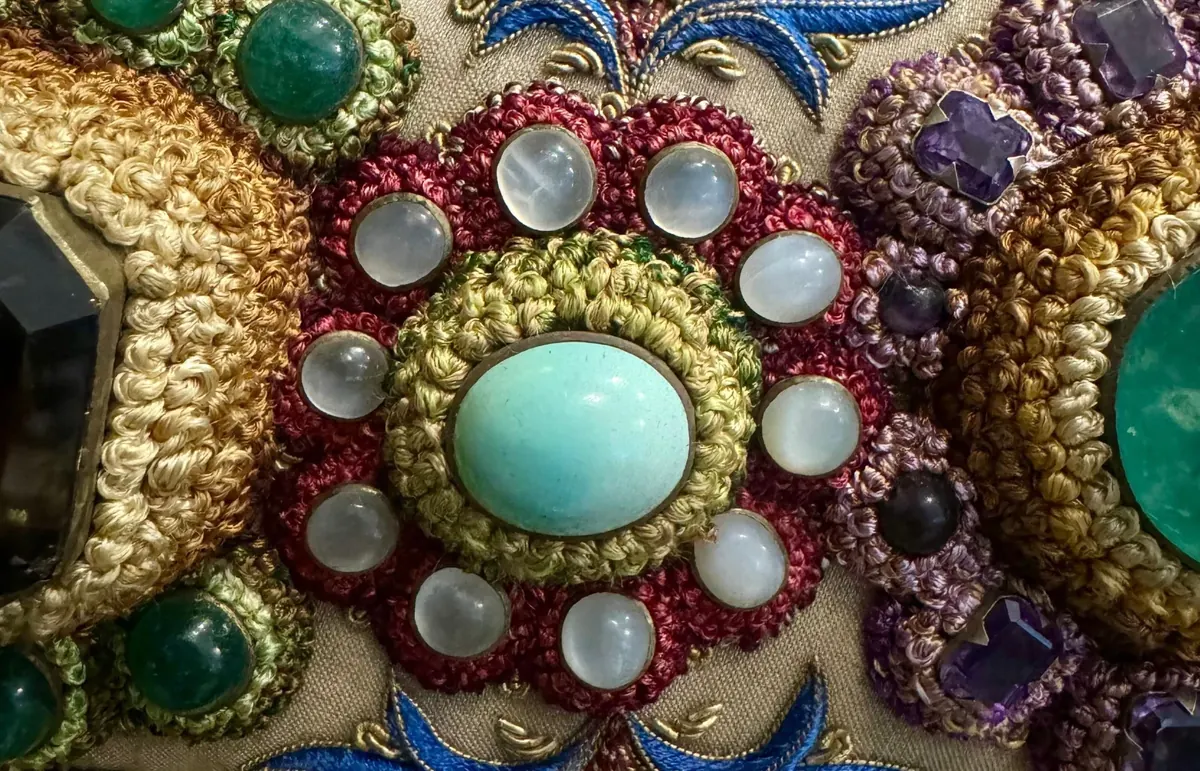
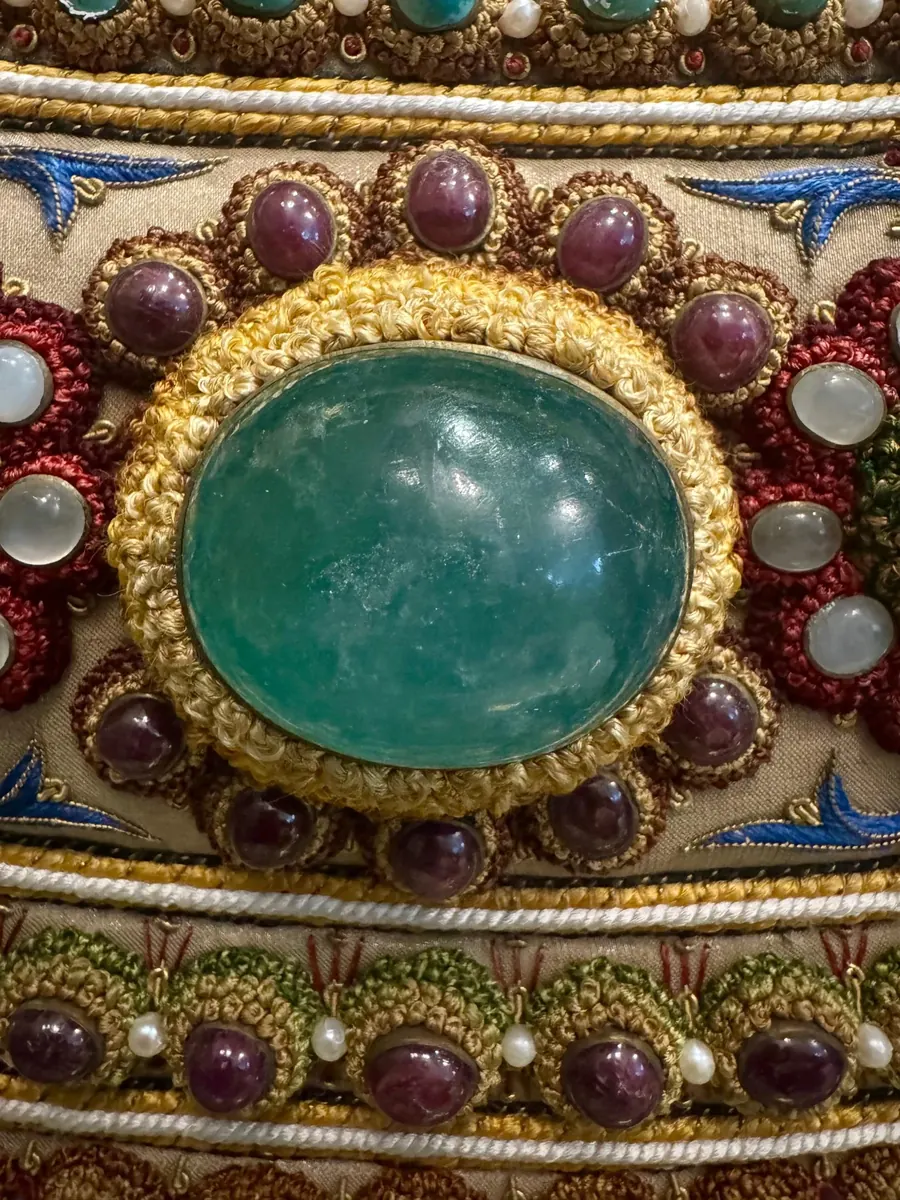
Magnified turquoise rosette ringed with pearls and coloured thread

Under the glass · a rosette from The Vase

From garment to picture

The greater part of zardozi was made for dress, furnishing and ceremony. A smaller body of work applies the same skills to pictures intended for framing. Here the embroiderer must also act as a painter: composition, colour and the fall of light carry as much weight as technique.

Sheikh Shams Uddin of Agra, honoured with the Padma Shri in 1989 for zari embroidery, worked in this pictorial mode. In The Vase he combines silk raised into relief with a vessel assembled from embroidered bands and gem materials.

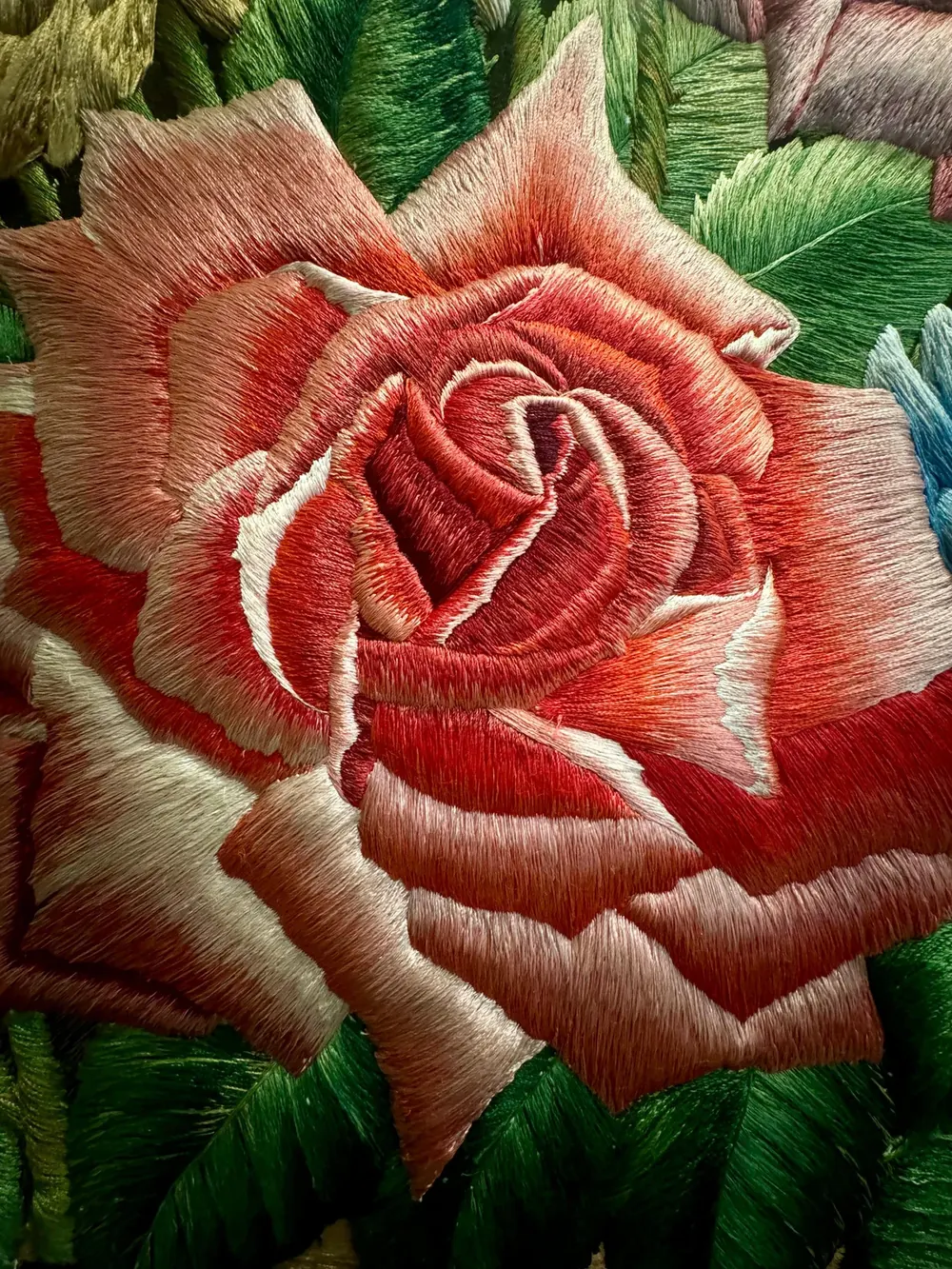
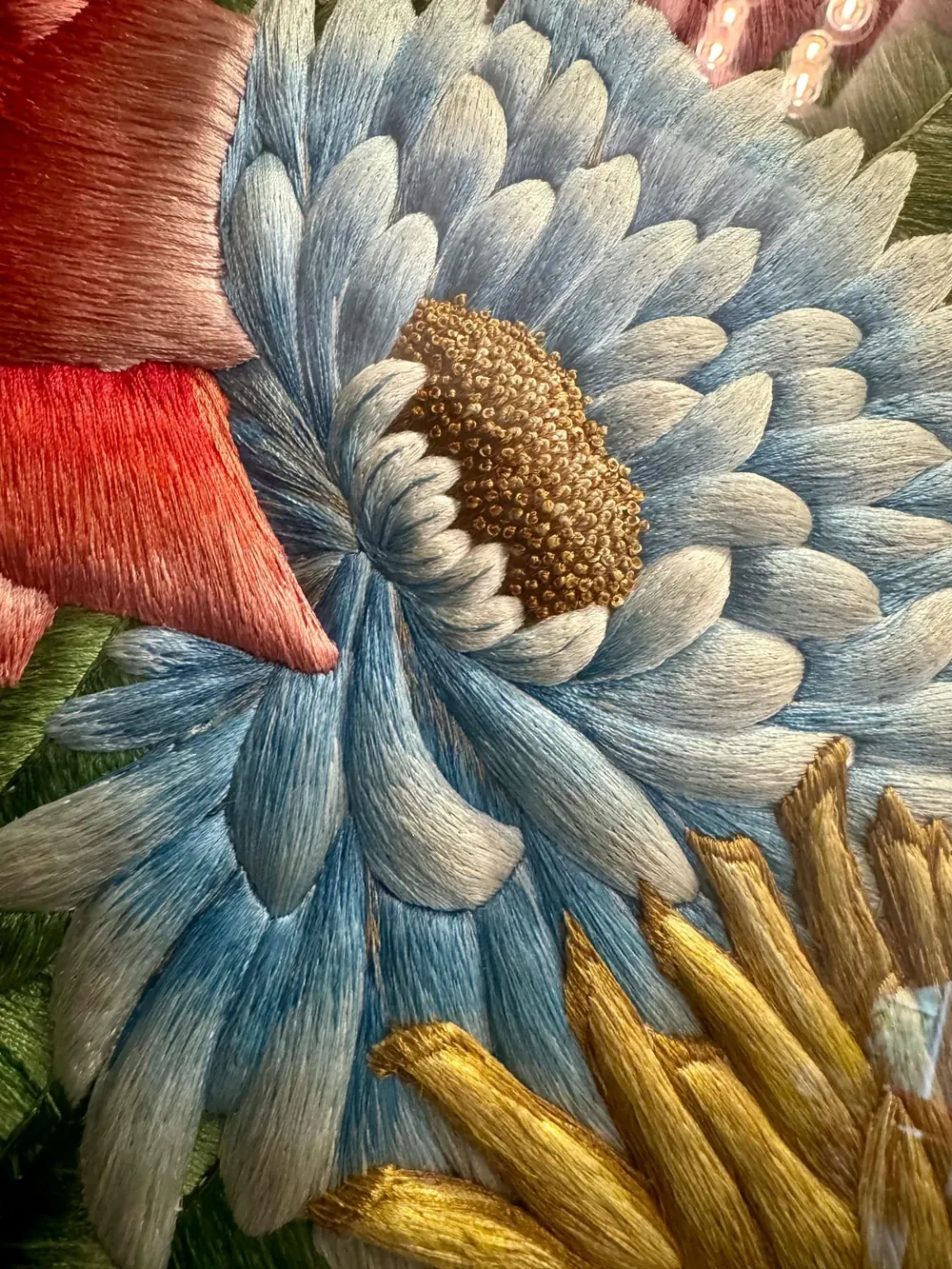
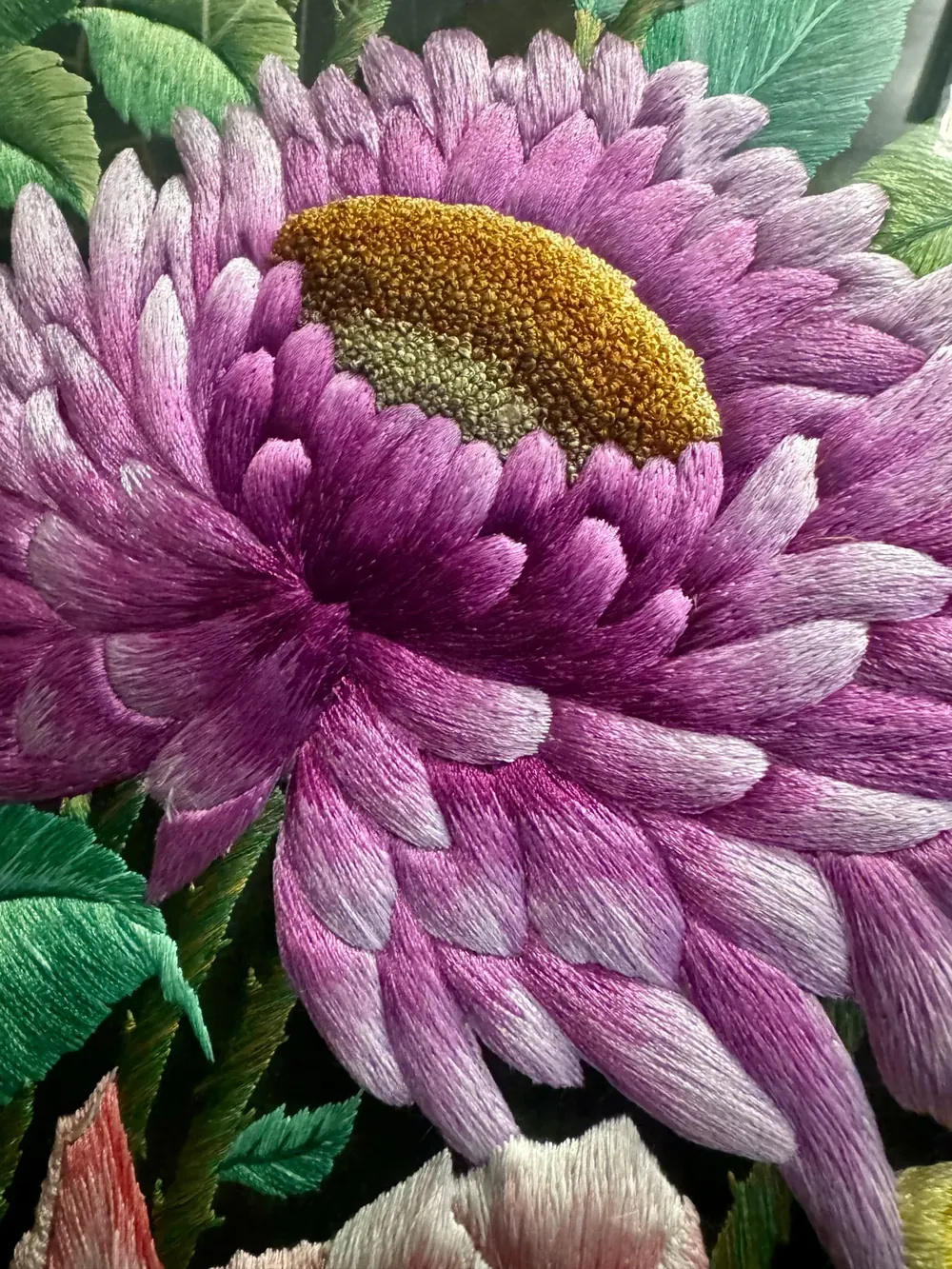
Violet bloom showing stitch direction
Stitch and relief
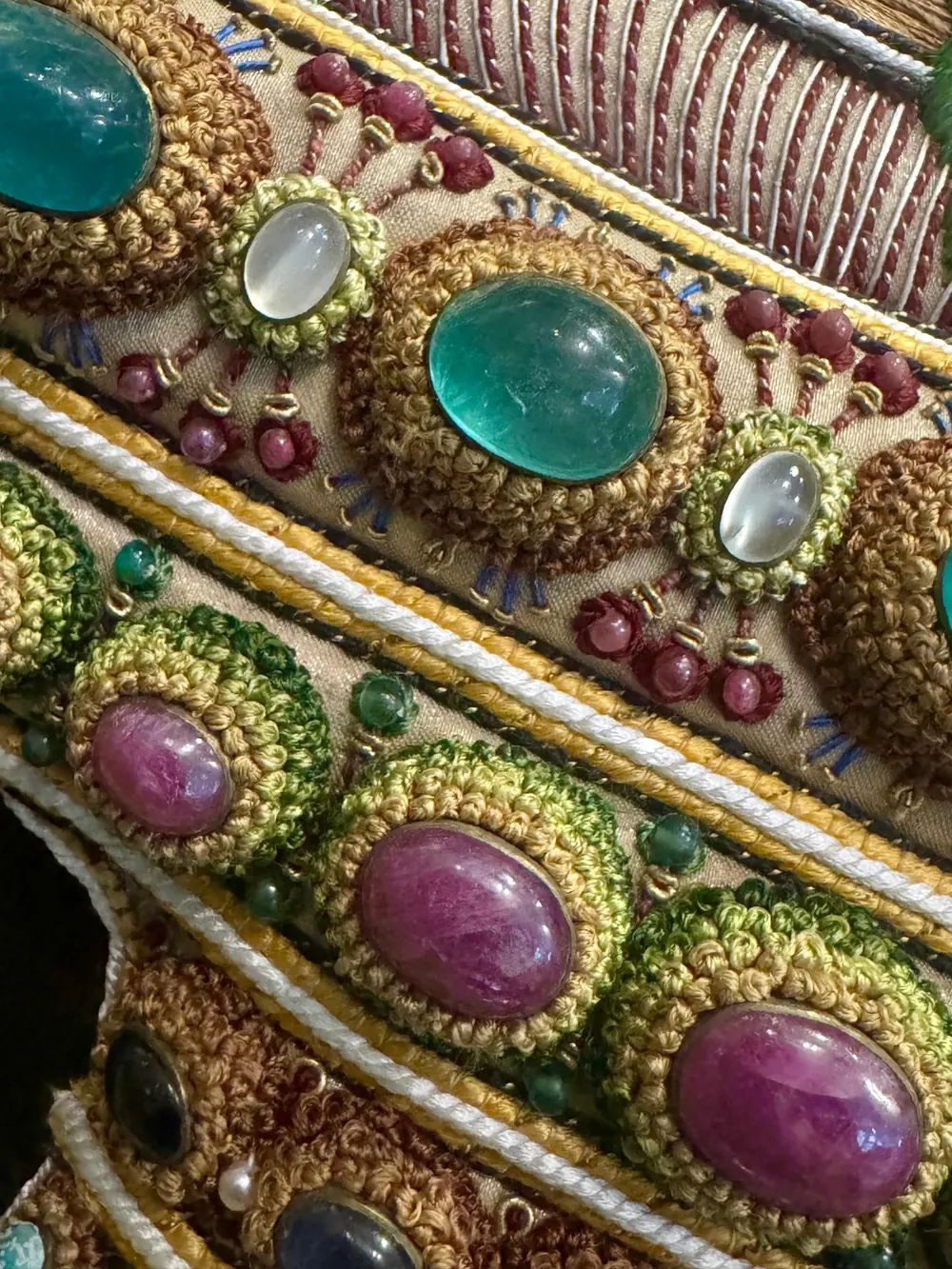
Embroidered stone settings in sequence
Settings in sequence

A method for close looking

Four points of attention, each illustrated from The Vase.

Stitch direction detail
I

Stitch direction

In accomplished silk work the stitch turns with the form. As the viewer moves, light travels across a petal and reveals its shape.

Relief detail
II

Relief

Dimensional embroidery stands proud of the ground. The edges of petals and leaves show true depth rather than painted shadow.

Settings detail
III

Settings

Where stones are used, the manner of holding them belongs to the design: coiled thread, borders and smaller beads frame each one.

Inscription detail
IV

Inscription

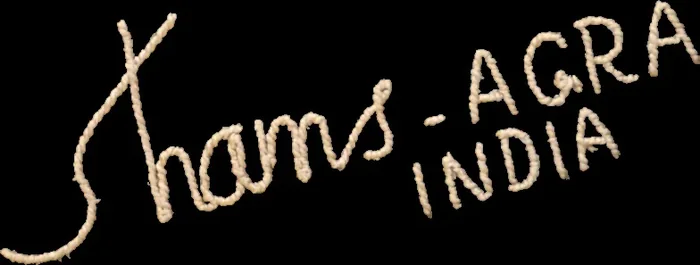
An embroidered name and place, such as Shams, Agra, India on The Vase, ties a work to its maker and its city.

Further reading: Indian embroidery, Victoria and Albert Museum and Incredible India on zardozi in Agra.